


































English
English
中文
Damping Sound Insulation Sheet (Double-Sided Self-Adhesive) - SoundBox
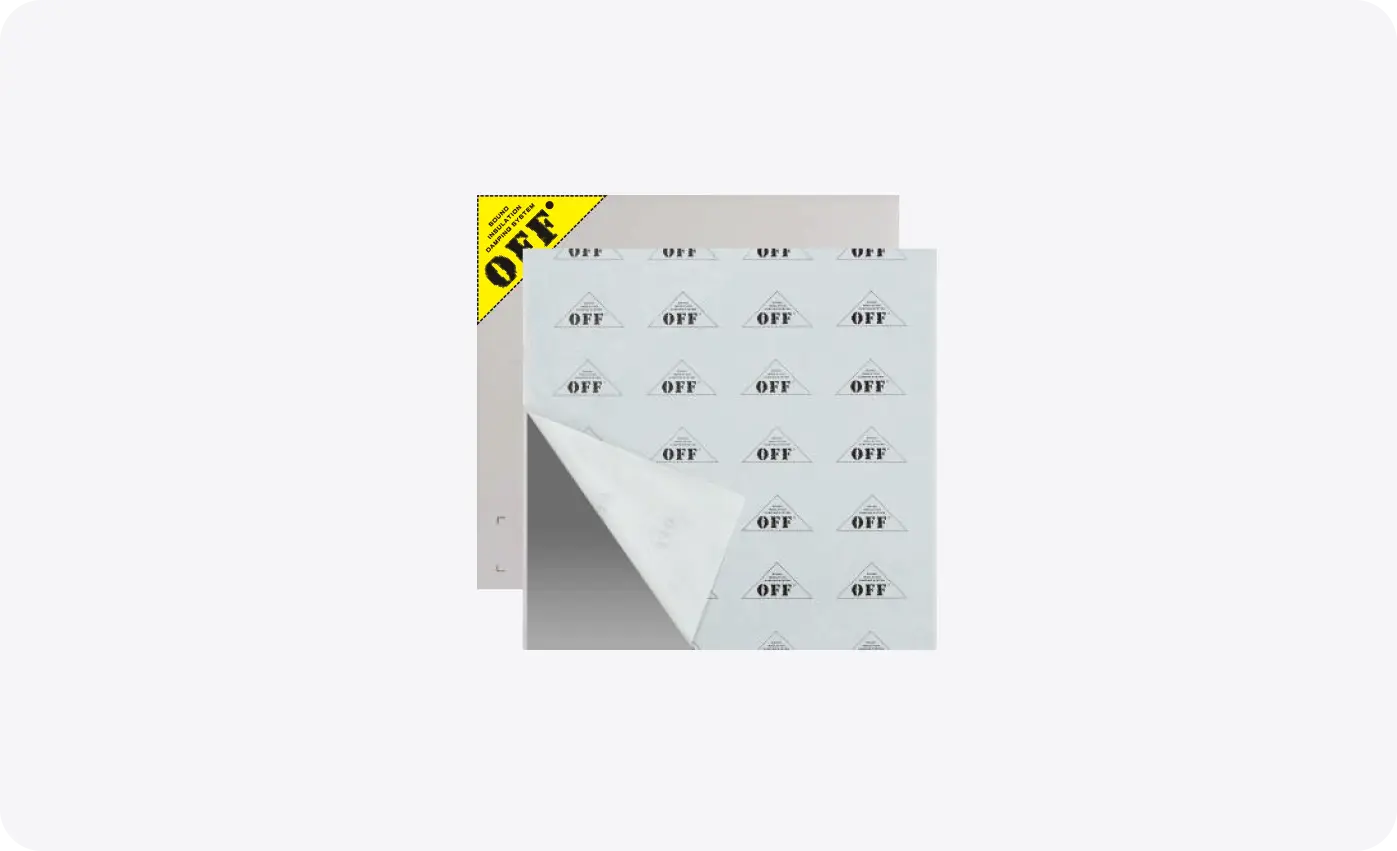
F100 / F150E / F200E
Damping Sound Insulation Sheet (Double-Sided Self-Adhesive)
Suitable for composite use with sound insulation renovation panels in places such as residences, hotels, recording studios, and broadcasting rooms, as well as for damping sound insulation and noise reduction in industrial and transportation equipment.
- Color:
F100(Black)/ F150E(Grey)/ F200E(Grey)
- Density:
3.5kg/㎡
- Weight:
F100 27.6kg/20pcs 、F150E 26.04kg/20pcs 、F200E 27.15kg/20pcs
- Specification:
F100 610mm x 610mm x 2.0mm 、F150E 610mm x 610mm x 1.5mm 、F200E 610mm x 610mm x 2.0mm
- Area:
0.3721m²
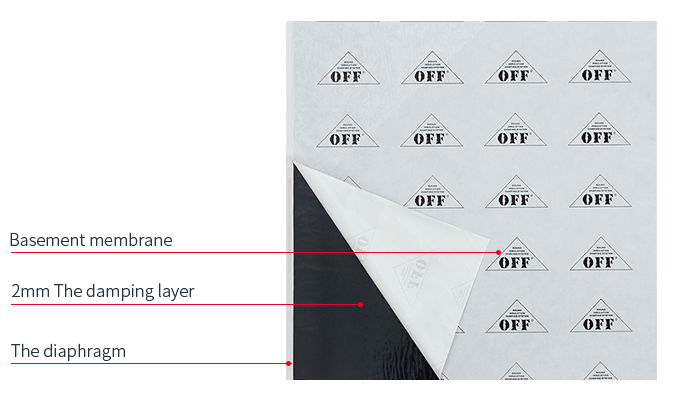
- Structure:
- Installation:

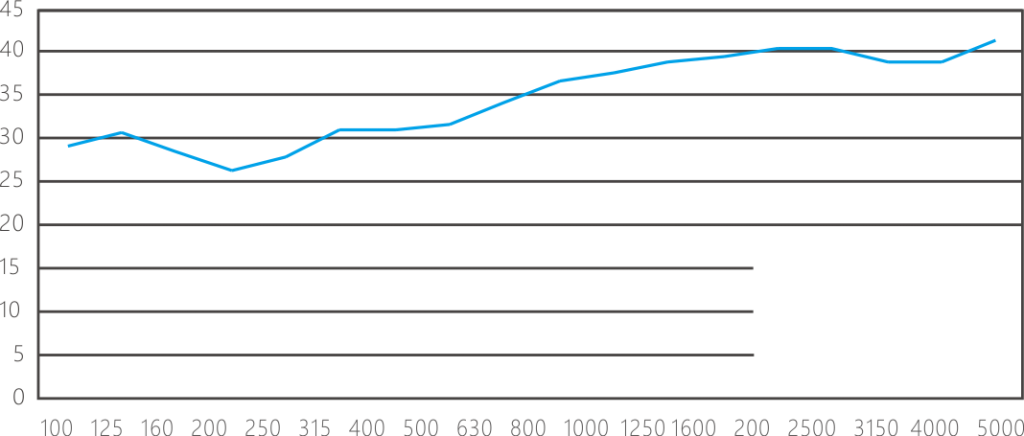
- Airborne sound insulation:
- Application:
It is applied to sheet metal composites to reduce resonance frequencies, achieving vibration damping and noise reduction; it is applied to composite lightweight gypsum board and wood panel walls to significantly improve the sound insulation of the walls; it is applied to composite ceilings to improve the sound insulation effect between floors; and it is applied to composite soundproof doors to change the vibration frequency of the door panels, significantly improving the sound insulation of the door panels.
- Feature:
Acoustic Power: Composite damping provides a sound insulation increase of $\ge 250\%$, offering excellent isolation, especially for mid-to-low frequencies.Ultimate Flexibility: Its ultra-flexible nature allows it to conform to any solid substrate, making it ideal regardless of shape, structure, or restricted space.Simple, Permanent Installation: Features a double-sided, super-strong self-adhesive for complete integration with the substrate surface. It is easily cut with a utility knife or scissors. Durability and Sustainability: Exhibits excellent fire resistance, temperature stability, elasticity, and tensile strength. The material is environmentally friendly, generating no manufacturing emissions or waste pollution, and is multi-cycle recyclable.
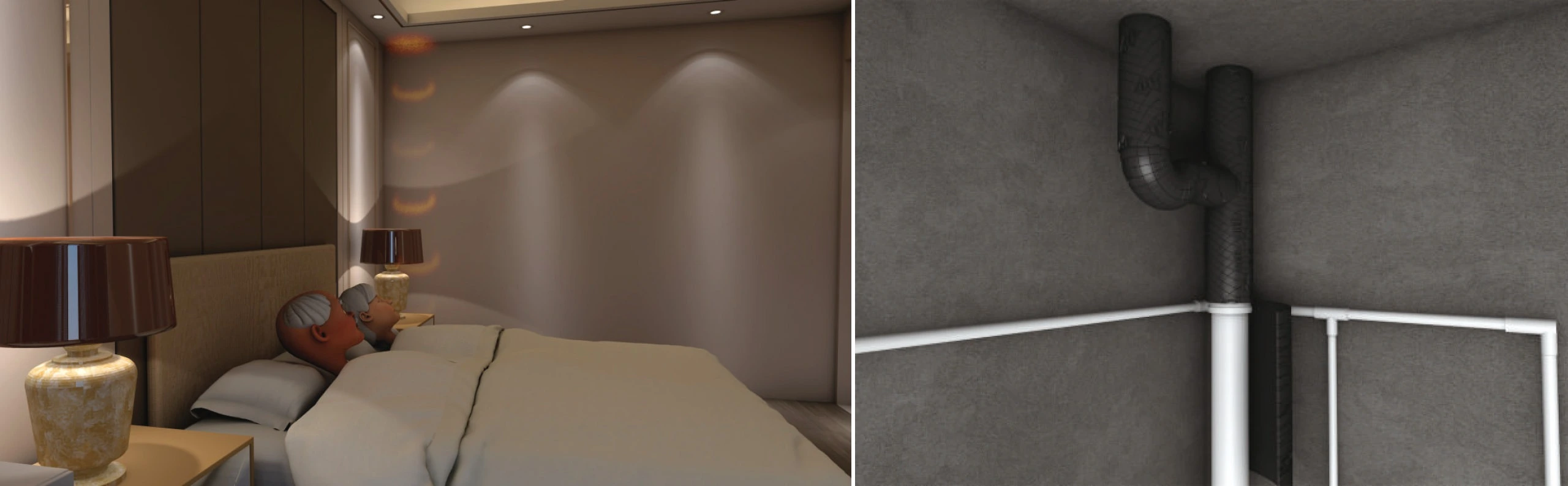
The damping sheet uses stable IIR polymer as the base material, with heavy mineral fillers added to enhance the damping effect. IIR is widely recognized as the optimal environmentally friendly damping and acoustic insulation material.
Resonance is dependent on the material's stiffness and thickness. Resonance occurs when sound is transmitted through a structure or matches the natural frequency of a panel. Stiff, thin metal studs/frames and panel materials are typically prone to passive resonance.
Broad, monolithic surface structures are often the root cause of resonant sound transmission, as noise utilizes these material properties and structures for propagation.
The significant damping properties of IIR can alter the resonant effect of the original base material, resulting in excellent wide-band damping and acoustic insulation performance.
We believe that success project comes with success team
Start your project today
The sales team is here to help